



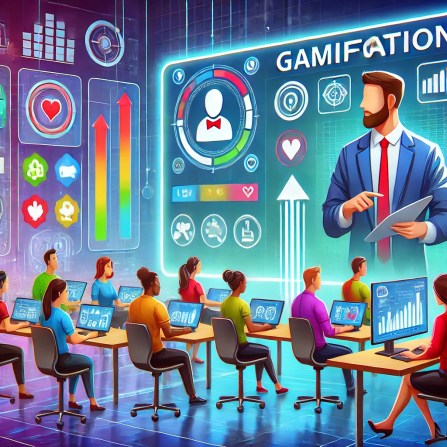
In today’s competitive job market, attracting and retaining top talent requires companies to go beyond traditional hiring methods. Gamification in hiring has emerged as a fresh, effective approach that not only engages potential candidates but also allows recruiters to assess skills, personality traits, and cultural fit in innovative ways. Here’s how gamification can revolutionize recruitment and why it’s worth considering for your hiring strategy.
What is Gamification in Hiring?
Gamification is the application of game-like elements—such as scoring, leaderboards, challenges, and rewards—in non-game contexts. In hiring, this means integrating these features into the recruitment process to create an interactive and competitive environment for candidates.
From coding challenges to problem-solving simulations, gamified assessments are designed to test relevant skills in a dynamic, real-time way. It’s a method that appeals particularly to younger job seekers, who are often more familiar with digital gaming environments.
4 Benefits of Gamification in Hiring
- Improves Candidate Engagement Gamified elements make the recruitment process feel like a fun, interactive experience. Engaged candidates are more likely to perform at their best, providing recruiters with a more accurate view of their capabilities.
- Assesses Real-World Skills Gamified assessments can simulate job-related challenges, allowing candidates to demonstrate practical skills rather than just theoretical knowledge. For example, for a software development role, candidates could participate in a coding game that tests their problem-solving abilities under time constraints.
- Enhances Employer Brand Companies that leverage gamification signal that they are innovative and forward-thinking. This can make them more attractive to top talent, particularly those in tech or creative industries.
- Offers Objective Evaluation Gamified hiring can reduce bias by focusing on performance in structured tasks rather than subjective impressions. It provides data-driven insights into each candidate’s capabilities, making hiring decisions more objective.
How Gamification Works in Recruitment
- Gamification can be used at various stages of the recruitment process, from initial screening to final assessments:
- Skill-Based Challenges: Create puzzles, coding tasks, or quizzes relevant to the job role to test specific skills. Platforms like HackerRank or Codility are popular in IT recruitment for this purpose.
- Simulations: Candidates might be given simulations of real job tasks. For example, a customer service position could involve handling a virtual customer complaint.
- Leaderboards and Badges: Showing a leaderboard of top candidates or awarding badges for different achievements can motivate candidates to excel and add a layer of friendly competition.
- Story-Driven Experiences: Some companies create narratives or missions that candidates need to complete, particularly effective for roles that require problem-solving or creative thinking.
Key Considerations for Gamifying Your Hiring Process
Before implementing gamification, keep these best practices in mind:
- Ensure Relevance: Design tasks that are relevant to the role. Unrelated games may make the process entertaining but won’t provide valuable insights.
- Make It Accessible: Ensure that the gamified tasks are inclusive and don’t inadvertently disadvantage candidates based on background, such as technical or language limitations.
- Provide Feedback: Offer feedback to candidates after each task, even if they don’t progress further. It’s a positive touchpoint that enhances candidate experience and keeps your employer brand strong.
- Apps like KnackApp can assist with this type of hiring process.
As gamification in hiring gains momentum, more companies are recognizing its potential to transform recruitment. By engaging candidates, assessing real-world skills, and enhancing the candidate experience, gamification helps businesses attract and identify top talent in a highly competitive landscape.
To see more about Elwood Roberts Service, please see this link.
Check out our blog page for more insights on the latest trends in Recruitment and the IT sector here.